
People spend a fortune searching for ways to live longer.
They buy supplements with names that sound like escaped laboratory chemicals. They follow complicated diets, track every heartbeat, and occasionally pay someone to freeze, inject, scan, or measure something they did not know they had.
Meanwhile, the lifestyle changes with the strongest evidence are mostly ordinary, inexpensive, and available right now.
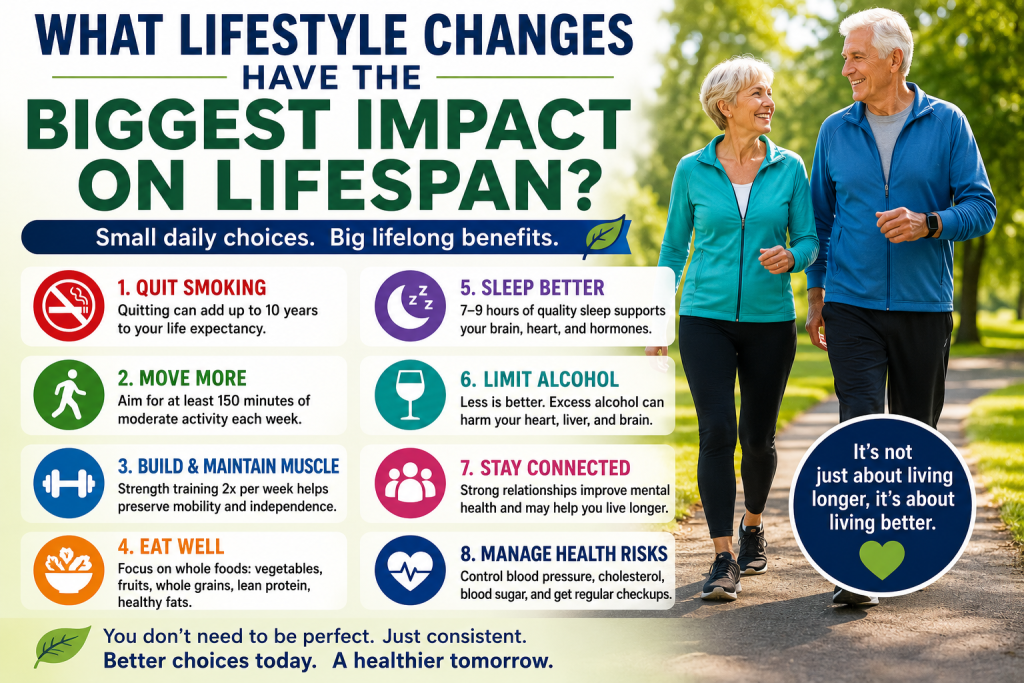
Do not smoke. Move your body. Maintain your strength. Eat mostly nutritious food. Sleep properly. Limit alcohol. Stay connected to other people. Manage your medical risks before they become emergencies.
None of that sounds as exciting as a miracle anti-aging pill. But when it comes to adding healthy years to life, the boring things are still doing most of the heavy lifting.
The goal is not merely lifespan—the total number of years you live. The more meaningful target is healthspan, the number of years you remain active, capable, mentally engaged, and independent.
You can explore that distinction further in our Elderhood guide, What’s the Difference Between Healthspan and Lifespan?.
Stop Smoking
For someone who smokes, quitting may be the single most powerful lifestyle change available.
Smoking increases the risk of heart disease, stroke, lung disease, numerous cancers, and premature death. According to the Centers for Disease Control and Prevention, quitting smoking reduces the risk of premature death and can add as much as ten years to life expectancy. The benefits begin regardless of age or how long a person has smoked.
Even quitting later in life can matter. Research has found that some people who stop smoking at ages 65 or 75 still gain meaningful life expectancy compared with those who continue.
That is important because some older smokers believe the damage has already been done.
It has not all been done.
Quitting can improve circulation, breathing, lung function, heart health, and the body’s ability to recover from illness. It can also reduce the danger that secondhand smoke creates for spouses, grandchildren, friends, and caregivers.
Stopping may require nicotine replacement, medication, counseling, or several attempts. That is not failure. Tobacco is highly addictive. The victory is continuing to try until it sticks.
Move More and Sit Less
Regular physical activity is one of the most reliable ways to improve both lifespan and healthspan.
Movement helps protect against:
- Heart disease
- Type 2 diabetes
- Stroke
- High blood pressure
- Some cancers
- Depression
- Loss of mobility
- Cognitive decline
- Falls and frailty
The National Institute on Aging describes physical activity as essential for healthy aging. Some benefits, such as improved mood, blood pressure, and sleep, can begin quickly. Other benefits accumulate over months and years.
You do not need to train for a marathon.
Walking is still one of the best forms of exercise for older adults because it is inexpensive, accessible, and easy to adjust. Ten minutes counts. A walk after meals counts. Gardening, dancing, swimming, cycling, housework, and climbing stairs count.
The biggest mistake is thinking that exercise only matters when it is intense.
Consistency usually matters more than drama.
A practical goal for many older adults is about 150 minutes of moderate activity each week, spread over several days. That might mean 30 minutes of walking five days a week. Someone who is currently inactive can begin with five or ten minutes and gradually build from there.
Before starting a new exercise routine, people with heart, balance, breathing, or joint problems should discuss safe limits with a healthcare professional.
Protect Your Muscle
Walking helps the heart and circulation, but walking alone may not do enough to preserve muscle.
Muscle loss becomes increasingly important with age. Weak muscles make it harder to rise from a chair, climb stairs, carry groceries, recover from surgery, and prevent falls.
This is why strength training may be one of the most underappreciated longevity habits for people over 60.
Strength training does not require a gym full of machines. It can include:
- Chair stands
- Wall push-ups
- Resistance bands
- Light dumbbells
- Carrying groceries
- Step-ups
- Supervised bodyweight exercises
Two strength sessions a week can make a real difference when performed safely and consistently.
Muscle also helps the body manage glucose. It acts almost like a storage and processing center for blood sugar. Maintaining muscle can therefore support metabolic health in addition to mobility.
Protein matters too. Older adults often eat less protein just when their bodies may need a stronger signal to maintain muscle. Good sources include eggs, fish, poultry, beans, lentils, Greek yogurt, cottage cheese, tofu, and other foods that fit the individual’s medical needs.
As we explain in Stay Healthy Until the Future Gets Here, muscle is not about vanity in later life. Muscle is survival equipment.
Improve the Overall Quality of Your Diet
There is no single perfect longevity diet.
Different cultures eat differently, and people have different medical needs, preferences, budgets, and tolerances. However, the healthiest eating patterns share common features.
They generally include more:
- Vegetables
- Fruits
- Beans and lentils
- Whole grains
- Nuts and seeds
- Fish
- Olive oil and other unsaturated fats
- Minimally processed foods
They generally include less:
- Sugary beverages
- Processed meats
- Excess sodium
- Refined carbohydrates
- Heavily processed snack foods
- Excessive portions
The Mediterranean-style eating pattern is frequently associated with better cardiovascular and metabolic health, but you do not need to live near the Mediterranean or eat olives while staring at the sea.
The larger principle is simple: replace some processed foods with foods closer to their original form.
Oatmeal instead of a sugary breakfast pastry.
Fruit instead of candy.
Beans instead of processed meat several times a week.
Water instead of soda.
Greek yogurt and berries instead of a dessert disguised as a breakfast food.
The National Institute on Aging includes nutritious food choices among the core behaviors associated with healthier aging.
Healthy eating does not require perfection. A good eating pattern followed most of the time is more useful than a flawless diet abandoned after nine days.
Maintain a Healthy Weight Without Losing Strength
Excess body fat, particularly around the abdomen, is associated with diabetes, cardiovascular disease, sleep apnea, joint stress, and some cancers.
However, weight loss after 60 must be approached carefully.
An older person can lose weight and still become less healthy if much of the weight lost is muscle. That is why the goal should not simply be “make the number on the scale smaller.”
The better goal is to reduce excess fat while preserving or increasing strength.
That usually means combining:
- Moderate calorie control
- Adequate protein
- Resistance training
- Regular walking
- Proper sleep
- Medical supervision when necessary
Rapid crash diets are rarely a smart strategy for older adults. They may produce dehydration, nutritional deficiencies, weakness, and muscle loss.
Weight is one health marker, not the entire report card.
Blood pressure, waist size, glucose, strength, mobility, sleep quality, and stamina may tell a more useful story than the scale alone.
Take Sleep Seriously
Sleep is not dead time.
During sleep, the brain and body perform essential maintenance involving memory, immune function, metabolism, hormone regulation, mood, and cardiovascular health.
Poor sleep has been linked with higher risks of diabetes, high blood pressure, heart disease, depression, cognitive impairment, and accidents.
Most adults generally need around seven to nine hours, although individual needs vary. Quality matters as much as quantity.
People should pay attention to:
- Loud snoring
- Waking up choking or gasping
- Morning headaches
- Severe daytime sleepiness
- Frequent nighttime awakening
- Difficulty falling asleep
- Restless legs
- Irregular sleep schedules
These can be signs of sleep apnea or another treatable sleep problem.
Untreated sleep apnea is not merely annoying snoring. It can repeatedly reduce oxygen and strain the cardiovascular system.
Our detailed article, What Role Does Sleep Play in Longevity?, explains why sleep is one of the body’s most powerful repair systems.
Research consistently places sufficient, high-quality sleep alongside diet and physical activity as a foundation of chronic-disease prevention.
Limit Alcohol
For years, moderate drinking was frequently promoted as good for the heart.
That message has become much less certain.
Alcohol can increase the risk of several cancers, interfere with sleep, raise blood pressure, interact with medication, worsen balance, and increase the danger of falls.
Older adults may also feel the effects of alcohol more strongly because the body processes it differently with age.
People who do not drink should not start for supposed health benefits.
Those who do drink should honestly evaluate how much they consume. A home-poured glass of wine can quietly become two or three standard drinks, especially when the glass resembles a small fishbowl.
Some people should avoid alcohol completely, particularly those with certain liver conditions, balance problems, memory concerns, addiction histories, or medication interactions.
Stay Socially Connected
Social connection is not just a pleasant extra. It is a health factor.
Loneliness and prolonged social isolation are associated with poorer mental health, cognitive decline, cardiovascular problems, and higher mortality risk. Research reviews describe social connection as an independent predictor of both physical and mental health outcomes.
This does not mean everyone must become a social butterfly.
A person can benefit from a few dependable relationships, regular phone conversations, religious or community participation, volunteering, group exercise, classes, clubs, or shared hobbies.
Dancing can be especially valuable because it combines movement, coordination, memory, music, and social engagement. Our article about Argentine tango after 60 explains how one activity can support balance, confidence, brain stimulation, and connection.
Social health often needs to be scheduled just like physical exercise.
Call someone.
Accept the invitation.
Join the class.
Volunteer one morning a week.
Isolation has a way of growing quietly when nobody interrupts it.
Control Blood Pressure, Cholesterol, and Blood Sugar
Medical risk management may not feel like a lifestyle change, but it deserves a place on this list.
High blood pressure, diabetes, and unhealthy cholesterol can damage blood vessels for years without causing obvious symptoms. By the time a person feels something, significant harm may already have occurred.
Lifestyle changes help, but they do not always replace medication.
That is not a moral failure.
A person can walk, eat well, and still require blood-pressure or cholesterol treatment because of genetics, age, or existing disease.
The smartest approach combines healthy habits with proper medical care.
That means:
- Regular checkups
- Taking prescribed medications correctly
- Monitoring blood pressure when advised
- Completing recommended blood tests
- Treating hearing and vision problems
- Keeping vaccinations current
- Discussing falls, memory changes, and depression early
A doctor who thinks broadly about prevention, mobility, nutrition, sleep, and quality of life can be especially helpful. See our guide, How Do I Find a Doctor Who Focuses on Living Longer and Healthier?.
Which Change Matters Most?
The answer depends on the person.
For a smoker, quitting smoking is probably the biggest opportunity.
For someone who sits most of the day, regular movement may have the greatest effect.
For an older adult becoming weak, strength training and adequate nutrition may be urgent.
For someone with untreated sleep apnea, proper diagnosis and treatment may change everything.
For someone living alone and becoming isolated, rebuilding social connection may be as important as improving the diet.
The key is not trying to fix everything by Monday.
Choose the biggest weakness and begin there.
Then stack another habit on top of it.
Walk for ten minutes.
Add protein to breakfast.
Practice chair stands twice a week.
Set a regular bedtime.
Call a friend every Sunday.
Replace one sugary drink.
Small actions repeated for years are not small anymore.
Final Takeaway
The lifestyle changes with the largest impact on lifespan are not mysterious.
Avoid tobacco.
Move regularly.
Preserve muscle.
Eat mostly nutritious food.
Maintain a healthy weight without becoming frail.
Sleep properly.
Limit alcohol.
Stay socially connected.
Manage medical risks.
There is no guarantee that perfect habits will produce a very long life. Genetics, illness, accidents, environment, and luck still matter.
But healthy habits improve the odds.
More importantly, they increase the chance that the additional years will be years you can actually use.
That is the real goal of Elderhood.
Not simply staying alive.
Staying strong enough to participate.
Clear enough to decide.
Mobile enough to go.
Connected enough to care.
And healthy enough to enjoy whatever tomorrow brings.
You do not have to be wealthy to improve your longevity. As discussed in Is Longevity Medicine Just for Wealthy People?, many of the most powerful longevity tools are ordinary habits rather than expensive treatments.
The body does not demand perfection.
It asks for better choices, repeated often enough to matter.
This article is for general educational purposes and is not a substitute for personalized medical advice. Speak with a qualified healthcare professional before making major changes to exercise, diet, alcohol use, medication, or treatment plans.