
GLP-1 drugs like Wegovy, Ozempic, Zepbound, and Mounjaro have changed the conversation about weight loss. For many people, especially those who have struggled with weight for years, these medications feel like the first tool that actually quiets the hunger, the cravings, and the constant mental battle with food.
But then comes the uncomfortable question:
Will I regain the weight if I stop taking a GLP-1 drug?
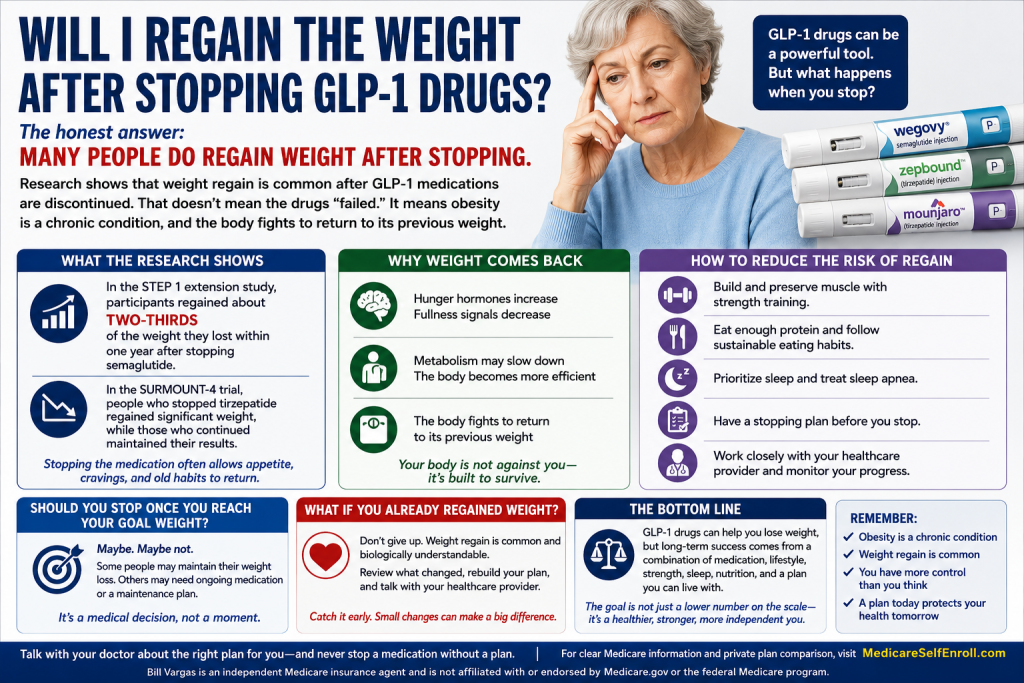
The honest answer is: many people do regain weight after stopping.
Not everyone regains all of it. Not everyone regains it quickly. But the research is very clear that weight regain is common after these medications are discontinued. That does not mean the drugs “failed.” It means obesity is not a short-term problem with a short-term solution. It is a chronic condition, and the body often fights to return to its previous weight.
That may not be what people want to hear, but it is better to know the truth than to walk into this thinking a few months of injections will magically rewrite the body forever. The body is clever. Sometimes too clever for its own good.
Why GLP-1 Drugs Help People Lose Weight
GLP-1 medications work by mimicking hormones in the body that help regulate appetite, blood sugar, digestion, and feelings of fullness. They can slow stomach emptying, reduce hunger, reduce food noise, and help people feel satisfied with less food.
That is why many people say, “For the first time, I feel in control.”
But here is the catch: while you are taking the medication, the drug is helping create that control. When the drug is stopped, many of those biological effects weaken or disappear. Appetite may return. Cravings may come back. Portions may slowly get larger again. And the old struggle can quietly reappear.
This is not because someone is weak. It is not because they are lazy. It is biology.
What the Research Shows About Weight Regain
The best-known evidence comes from studies where people stopped GLP-1 or similar anti-obesity medications after losing weight.
In the STEP 1 extension study, people who had taken semaglutide 2.4 mg for weight loss regained, on average, about two-thirds of the weight they had lost during the year after stopping the medication. The study also found that some of the improvements in cardiometabolic health moved back toward where they were before treatment.
That is a very important finding. It tells us that the medication was not simply helping people “learn better habits.” It was actively helping their bodies stay in a weight-loss state. Once the medication stopped, the body began pushing back.
A similar pattern was seen with tirzepatide, the medicine used in Zepbound and Mounjaro. In the SURMOUNT-4 trial, adults first lost an average of about 20.9% of body weight during 36 weeks of open-label tirzepatide treatment. Then participants were randomized either to continue tirzepatide or switch to placebo. Those who stopped and switched to placebo regained substantial weight, while those who continued tirzepatide lost more weight or maintained better results.
In plain English: people who stayed on the medication generally did better at keeping the weight off than people who stopped.
That should not surprise us. We do not usually expect blood pressure medication to keep working after a person stops taking it. We do not expect cholesterol medication to keep lowering cholesterol after stopping it. Yet with weight-loss medication, many people still imagine it should work like a temporary jump-start.
That is probably the wrong way to think about it.
Does Everyone Regain the Weight?
No. Not everyone regains all the weight.
Some people regain only part of it. Some maintain a meaningful amount of weight loss, especially if they have made strong lifestyle changes, increased protein, built muscle, improved sleep, changed eating patterns, and stayed physically active.
But the risk of regain is real.
A 2026 systematic review in BMJ looked at weight regain after stopping weight-management medications and found that regain occurred after stopping treatment. The review estimated an average regain rate of about 0.4 kg per month after cessation across the studies it examined.
That is not a small issue. Over months and years, slow regain can become major regain.
And that is how weight often comes back. Not overnight. Not in one dramatic moment. It creeps back. A little more hunger. A slightly bigger dinner. A skipped walk. A few pounds. Then a few more. Before long, the pants are holding a protest meeting.
Why the Body Regains Weight
To understand weight regain, we have to understand something most diets never explain properly:
The body does not like losing weight.
When you lose weight, the body often responds as if there is a threat. Hunger hormones may rise. Fullness signals may weaken. Metabolism may slow. The body may become more efficient, meaning it burns fewer calories than before.
This is one reason people often say, “I’m eating better than I used to, but the weight is coming back.”
They may be telling the truth.
After weight loss, the body may require fewer calories than it did before. So if someone returns to old eating patterns, even slightly, weight can return faster than expected.
GLP-1 drugs help counter some of those signals. They reduce appetite and food noise. But when they are stopped, those protective effects can fade.
Does This Mean GLP-1 Drugs Are Forever?
For some people, they may be long-term medications.
That does not mean everyone must stay on them forever. But it does mean the decision to stop should be made carefully with a healthcare provider, not casually because the scale finally looks better.
Obesity medicine is moving toward treating obesity as a chronic condition. That means the treatment plan may need to be long-term, just like treatment for high blood pressure, diabetes, or high cholesterol.
Some people may continue on a full dose. Some may step down to a maintenance dose. Some may switch to another medication. Some may stop because of side effects, cost, Medicare coverage issues, surgery, personal preference, or because the benefit is no longer worth it.
But the important point is this:
Stopping should be a plan, not an accident.
Running out of medication and hoping for the best is not a strategy. That is like taking the batteries out of the smoke detector and saying, “Let’s see what happens.”
The Medicare and Cost Problem
For many seniors, the decision is not just medical. It is financial.
GLP-1 drugs can be very expensive, and insurance coverage has been inconsistent. Medicare has historically covered GLP-1 medications for certain medical indications, such as diabetes or cardiovascular risk, but coverage for weight loss alone has been limited. New Medicare-related programs and demonstrations are being discussed and developed, but eligibility rules matter and can change. Seniors should verify coverage directly with their Part D plan, doctor, pharmacist, and Medicare resources before assuming a drug will be affordable.
This is especially important because stopping due to cost is one of the real-world reasons people regain weight. If someone loses 40 pounds but then cannot afford the medication, the body does not politely say, “No problem, I’ll behave myself now.”
The biology keeps going.
How to Reduce the Risk of Regaining Weight
The goal is not to scare people. The goal is to prepare them.
If you are taking a GLP-1 medication, the best time to plan for maintenance is not after you stop. It is while the medication is working.
Here are the most important areas to focus on.
1. Build Muscle While You Are Losing Weight
This is especially important in Elderhood.
When people lose weight, they can lose fat, but they may also lose muscle. For older adults, losing muscle is dangerous because muscle protects mobility, balance, strength, independence, and fall prevention.
If you lose weight but become weaker, that is not a victory. That is a trade-off.
Resistance training matters. This does not mean you need to become a bodybuilder at 75 and start grunting in the gym like a confused buffalo. It means using your muscles regularly.
That may include light weights, resistance bands, chair squats, wall push-ups, supervised strength training, or physical therapy-guided exercises.
The more muscle you preserve, the better your body may handle long-term weight maintenance.
2. Eat Enough Protein
Protein is critical during weight loss, especially for seniors.
A GLP-1 drug may reduce appetite so much that some people simply do not eat enough. That may sound like a good problem, but it can become a bad one if the person is not getting enough protein, vitamins, minerals, and fluids.
Affordable protein sources include eggs, Greek yogurt, cottage cheese, tuna, chicken, turkey, beans, lentils, tofu, fish, lean meat, and protein shakes when appropriate.
Protein helps preserve muscle, supports healing, and keeps meals more satisfying.
For older adults, every meal should include some form of protein. A cup of coffee and a cracker is not breakfast. That is a hostage negotiation with your metabolism.
3. Create Eating Habits You Can Live With
One mistake people make on GLP-1 drugs is eating very little without building a real eating pattern.
They lose weight because the medication reduces appetite, but they never learn what normal maintenance eating looks like.
That can become a problem when the medication is reduced or stopped.
A better approach is to use the quieted appetite as an opportunity to build a sustainable routine: regular meals, protein, vegetables, fiber, hydration, fewer ultra-processed foods, and smaller portions that still nourish the body.
The goal is not starvation. The goal is structure.
4. Pay Attention to Sleep
Poor sleep can increase hunger, cravings, insulin resistance, and weight regain risk. Many seniors also struggle with sleep apnea, which is closely connected to weight, fatigue, blood pressure, and metabolic health.
If sleep is poor, weight maintenance becomes harder.
This is where people need to be honest. If you snore heavily, wake up tired, fall asleep during the day, or have been told you stop breathing at night, talk to your doctor about sleep apnea.
Trying to lose weight while ignoring sleep is like trying to fill a bucket with a hole in the bottom.
5. Have a Stopping Plan Before You Stop
This is probably the most important point.
If you and your doctor decide to stop a GLP-1 drug, ask:
What is the maintenance plan?
Will the dose be reduced slowly?
Will another medication be considered?
How often will weight be monitored?
What should I do if hunger returns?
What amount of regain should trigger a follow-up?
Should I meet with a dietitian?
Should I increase strength training?
Should my protein goal change?
Do not wait until 20 pounds have returned. Catch the problem early.
Weight regain is easier to address at 5 pounds than at 35 pounds. That is not judgment. That is arithmetic.
Should You Stop Once You Reach Your Goal Weight?
Maybe. Maybe not.
Reaching a goal weight is not the same as solving the biological problem that caused the weight gain in the first place.
Some people may be able to stop and maintain enough of their weight loss through lifestyle changes. Others may need ongoing medication to maintain the benefit.
This is a medical decision. It should be based on your health history, side effects, cost, blood sugar, blood pressure, heart risk, sleep apnea, mobility, quality of life, and personal preferences.
The mistake is thinking that goal weight means the job is finished.
In reality, goal weight is not the finish line. It is the beginning of the maintenance phase.
And maintenance is where the real battle begins.
What If You Already Regained Weight?
First, do not beat yourself up.
Weight regain after stopping GLP-1 drugs is common and biologically understandable. Shame does not burn calories. It just makes people give up.
If weight has started coming back, contact your healthcare provider. Review what changed. Did hunger return? Did portions increase? Did activity decrease? Did sleep worsen? Did you lose muscle? Did stress increase? Did the medication stop because of cost or side effects?
Then rebuild the plan.
Sometimes the answer may be restarting medication. Sometimes it may be changing the dose. Sometimes it may involve nutrition counseling, strength training, sleep treatment, or another medical option.
The key is not to disappear from care because you feel embarrassed.
Doctors have seen this before. You are not the first person whose body fought back.
The Bottom Line
Yes, many people regain weight after stopping GLP-1 drugs.
The evidence shows that weight regain is common after stopping semaglutide and tirzepatide, and some health improvements may also move backward when weight returns.
But that does not mean the situation is hopeless.
It means GLP-1 medications should be treated as part of a long-term health plan, not as a quick vacation from obesity. The best results come when medication is combined with protein, strength training, better sleep, improved nutrition, medical follow-up, and a realistic maintenance strategy.
For seniors, the goal is not just to lose weight. The goal is to protect strength, mobility, independence, and quality of life.
Because the real victory is not simply seeing a lower number on the scale.
The real victory is being able to move better, breathe easier, get out of a chair more easily, reduce health risks, and live with more confidence.
GLP-1 drugs can be a powerful tool. But like any tool, they work best when used wisely.
Do not stop without a plan. Do not assume the weight will stay off by itself. And do not let shame or confusion keep you from asking for help.
Your body may try to regain the weight.
But with the right plan, you do not have to surrender without a fight.