
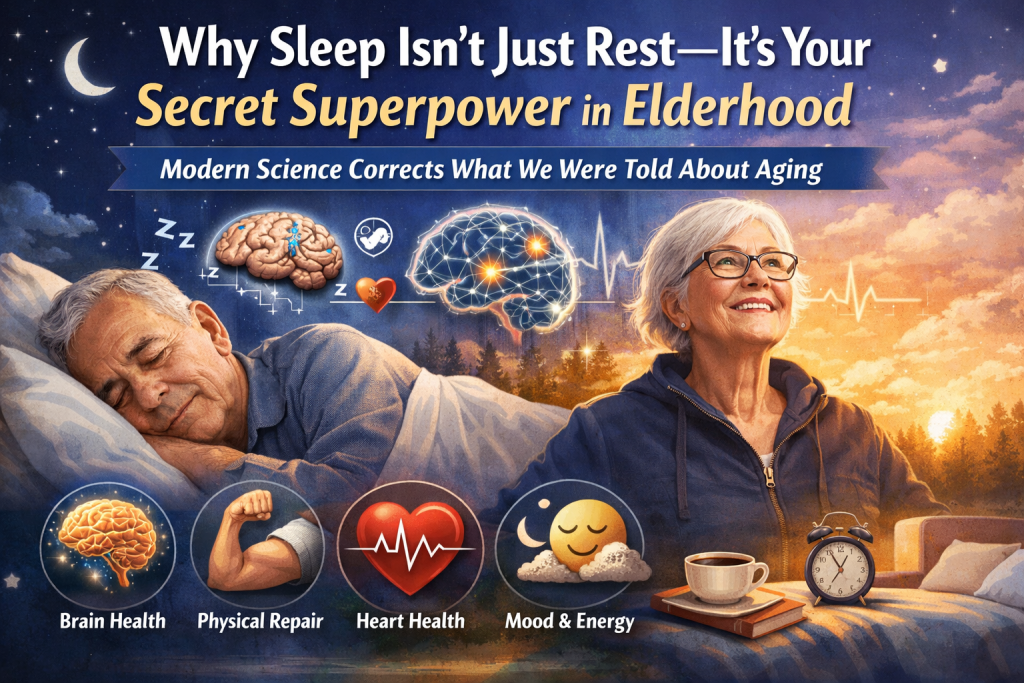
If you grew up hearing “you’ll feel better after a good night’s sleep,” someone wasn’t kidding — but they also didn’t tell you the half of it. Modern research is finally catching up with what your body has already known for decades: sleep is foundational to health, longevity, and brain power — especially in Elderhood.
Let’s cut through the fluff and myths (yes, even the “you need less sleep as you get older” one) and get real about why sleep deserves to be treated like the health priority it actually is.
Myth: Older Adults Need Less Sleep
This one drives me bananas.
Many seniors are told that needing less sleep is just part of aging. Science now says that’s not true — what changes are your sleep patterns, not your need for sleep.
Researchers agree: most adults — regardless of age — need 7–9 hours per night for optimal brain and body function. What changes with age is that your circadian rhythm shifts, making many seniors feel sleepy earlier and wake up earlier. But that doesn’t mean your body needs less rest. It still wants — and needs — full restorative sleep.
What Really Happens to Sleep With Age
Here’s what the science shows:
- Sleep becomes more fragmented. You may wake up more often. That’s annoying — but it doesn’t mean you don’t need long stretches of sleep.
- Deep sleep decreases. That’s the stage where your body repairs cells and your brain consolidates memories.
- You might nap more. Naps are fine — if they don’t sabotage your nighttime sleep.
So if you’re waking up tired after “enough” hours? Your quality of sleep is the likely issue — not your age.
Why Sleep Matters More Than You Think
🧠 1. Brain Protection & Memory
During sleep, your brain clears out toxic proteins (like beta-amyloid) that are linked to Alzheimer’s and other dementias. Skimp on sleep, and that garbage piles up. Yes — sleep is literally brain detox.
💪 2. Physical Repair
Growth hormones surge during deep sleep. Your muscles, tissues, bones, and immune system all get repair signals. Sleeping poorly is like running on fumes.
🫀 3. Heart Health
Good sleep lowers inflammation and blood pressure. Chronic sleep loss? That’s a risk factor for heart disease — the number one killer in older adults.
🧠 Mood & Mental Health
Poor sleep fuels anxiety and depression — and science shows it causally worsens them, especially in older adults.
How Much Sleep Should You Actually Be Getting?
Aim for 7–9 hours a night.
Probably closer to 8. No, “I get by fine on 5” isn’t winning you any longevity trophies.
Practical Tips Seniors Can Use Tonight (No Weird Gadgets Required)
🌙 1. Fix Your Light Exposure
First thing in the morning — open curtains or step outside.
Bright light early helps reset your internal clock.
🚫 2. Ditch Caffeine After Midday
Coffee at 2 p.m.? Yeah, that might be why you’re tossing and turning.
💻 3. Shut Off Screens an Hour Before Bed
Blue light messes with melatonin — your sleep hormone. It’s science, not opinion.
🛏️ 4. Make Your Bed a Sleep-Only Zone
No TV, no reading, no doom-scrolling. Train your brain: bed = sleep.
🧘 5. Wind Down Ritual
Read a physical book, stretch gently, deep breathing — low-tech, high-return.
💤 6. Naps Are OK — If You Time Them Right
20–30 minutes before 3 p.m. can refresh without wrecking nighttime sleep.
When Sleep Problems Need Real Attention
If you’re experiencing:
- Loud snoring with gasps
- Frequent night awakenings
- Breathing pauses (or someone tells you this)
- Restless legs that make sleep impossible
- Persistent insomnia
These are signs of real sleep disorders — sleep apnea, restless legs syndrome, insomnia, and more. These deserve medical evaluation because they aren’t normal parts of aging.
Bottom Line (No Sugar-Coating): Treat Sleep Like Medicine
We’re not just talking “feeling better tomorrow.”
We’re talking about:
- Preserving brain function
- Supporting immunity
- Maintaining heart health
- Living longer, healthier, sharper
If you want to age well — and I mean thriving in Elderhood, not just surviving it — sleep is non-negotiable.
If you want a follow-up on supplements, sleep hacks, and science-backed rituals that actually improve sleep in Elderhood, just say the word. I’ve got you.
Take the Quiz
1. How many hours do you usually sleep at night?
A. Less than 5
B. 5–6
C. 7–8
D. More than 8
2. Do you wake up feeling refreshed most mornings?
A. Almost never
B. Occasionally
C. Most days
D. Almost always
3. How often do you wake up during the night?
A. Many times
B. A few times
C. Once or twice
D. Rarely
4. Do you feel sleepy or foggy during the day?
A. Constantly
B. Often
C. Occasionally
D. Rarely
5. Do you nap during the day?
A. Long naps, every day
B. Short naps most days
C. Occasionally
D. Rarely or never
FAQ
Do seniors really need as much sleep as younger adults?
Yes. The need for sleep does not decrease with age. What changes is sleep structure, not sleep requirement. Your brain still needs 7–9 hours.
Why do I wake up so early now?
Your internal clock shifts earlier with age. This is called a circadian rhythm change. It does not mean you need less sleep. It means timing matters more.
Is napping bad for seniors?
Not if done correctly. Short naps (20–30 minutes) before mid-afternoon can help. Long or late naps often sabotage nighttime sleep.
Why do I wake up tired even after 7–8 hours?
This usually points to poor sleep quality, not duration. Common causes include sleep apnea, restless legs, medication effects, or fragmented sleep.
Is it normal to wake up multiple times at night?
It’s common, but not ideal. Frequent awakenings reduce deep sleep, which is critical for memory, immunity, and repair.
Can poor sleep affect memory and dementia risk?
Yes. During sleep, the brain clears toxic proteins linked to Alzheimer’s. Chronic poor sleep allows these to accumulate.
Does medication interfere with sleep?
Many do — including some blood pressure meds, antidepressants, and pain medications. Never stop a medication without medical advice, but do ask questions.
Is insomnia “just part of getting older”?
No. That’s outdated thinking. Persistent insomnia is a medical issue, not an age requirement.
What is the single biggest sleep mistake seniors make?
Ignoring light exposure. Morning sunlight helps regulate sleep far more than most people realize.
Elderhood Bottom Line
Sleep is not optional maintenance.
It is active medicine for your brain, heart, mood, and longevity.
In Elderhood, protecting sleep is one of the smartest decisions you can make — and one of the most overlooked.
If society won’t tell you that, Elderhood will.