Longevity is a popular word today. You see it everywhere: longevity clinics, longevity supplements, longevity diets, longevity doctors, longevity tests, longevity programs, and probably before long, longevity toothpaste.
But let’s slow down and ask the real question:
What does a typical longevity health plan actually include?
A real longevity plan is not about chasing immortality. Nobody is getting out of here alive, despite what some internet gurus may be selling from their beach houses. A good longevity plan is about something far more practical: helping you live longer, stay stronger, remain independent, protect your brain, reduce preventable disease, and keep enjoying life with as much dignity and function as possible.
In other words, the goal is not just more years. The goal is better years.
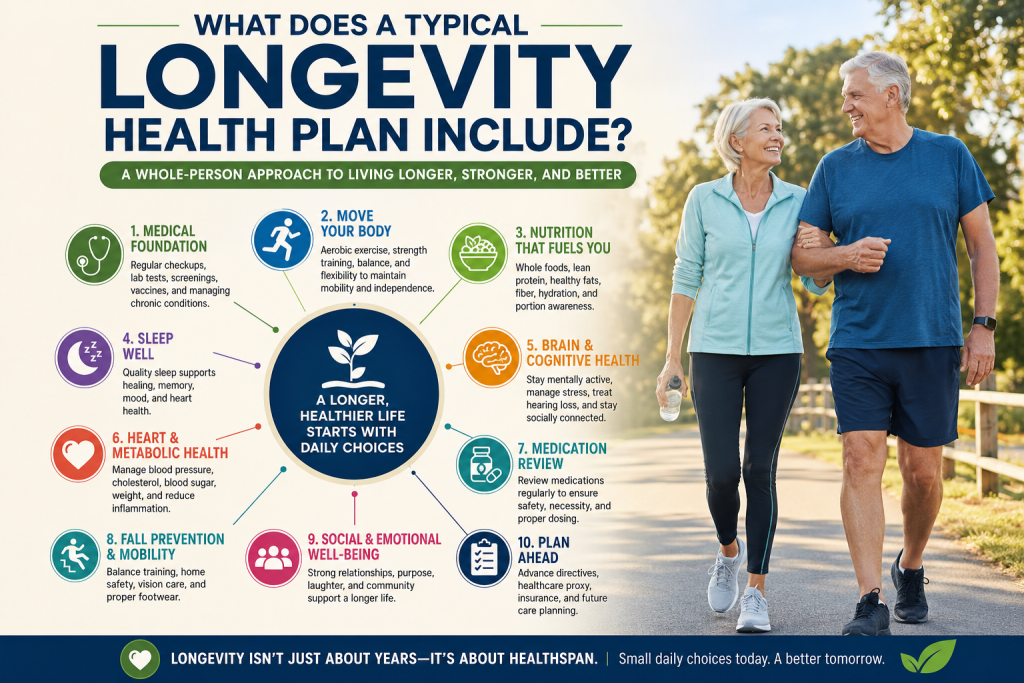
A smart longevity health plan usually includes several major areas: medical checkups, lab testing, exercise, nutrition, sleep, mental health, brain health, social connection, medication review, fall prevention, and long-term planning. It is not one magic pill. It is a system.
And yes, that sounds like work. But then again, so is recovering from preventable decline. Given the choice, I would rather do the work on the front end.
1. A Realistic Medical Baseline
A longevity plan should begin with a clear picture of where you are today.
That means regular visits with your primary care doctor, age-appropriate screenings, blood pressure checks, cholesterol testing, blood sugar testing, medication review, vaccination review, and discussion of family history. The National Institute on Aging emphasizes that regular health screenings and medical checkups are important parts of healthy aging.
This is not glamorous, but it matters.
You cannot manage what you do not measure. If your blood pressure is high and you do not know it, you are not “fine.” You are uninformed. If your blood sugar is creeping upward, ignoring it does not make it go away. If your cholesterol is a problem, pretending the lab report is written in ancient Greek will not protect your arteries.
A longevity health plan should identify risk early, before the body starts sending expensive warning signals.
Common baseline items may include:
Blood pressure
Cholesterol and triglycerides
Blood glucose and A1C
Kidney function
Liver function
Thyroid function when appropriate
Vitamin B12 or vitamin D when clinically appropriate
Weight, waist size, and body composition
Medication review
Cancer screenings when recommended
Bone density screening when appropriate
Hearing and vision checks
Dental health review
This is the foundation. Without it, everything else is guesswork.
2. Exercise That Protects Function
Exercise is one of the central pillars of longevity. But for older adults, the goal is not just looking good in a bathing suit. That ship may have sailed, circled the harbor, and come back with a buffet.
The real goal is function.
Can you get out of a chair? Climb stairs? Carry groceries? Walk without fear? Get off the floor if you fall? Keep your balance? Maintain muscle? Protect your bones?
The CDC recommends that adults 65 and older aim for at least 150 minutes of moderate-intensity aerobic activity each week, plus at least two days of muscle-strengthening activity, and activities that improve balance.
That means a proper longevity plan should include three types of movement:
Aerobic exercise for heart, lungs, circulation, blood sugar, and stamina.
Strength training for muscle, bones, balance, metabolism, and independence.
Balance and flexibility work to reduce fall risk and keep the body moving well.
Walking is excellent, but walking alone may not be enough. Many older adults walk regularly but still lose muscle because they do not challenge their muscles. Strength training does not mean becoming a bodybuilder. It can mean resistance bands, light weights, machines, wall pushups, chair squats, or supervised training.
Muscle is not just about strength. Muscle is a survival organ in later life. It helps regulate blood sugar, protects mobility, reduces frailty, and helps you recover from illness.
A good longevity plan should ask: What are we doing to preserve muscle?
That question becomes more important every year after 60.
3. Nutrition That Supports Strength, Not Just Weight Loss
Many people think a longevity diet means eating less. That is only partly true. In Elderhood, the bigger danger may not be just eating too much. It may be eating poorly and losing muscle.
A longevity nutrition plan should focus on quality food, sufficient protein, fiber, healthy fats, hydration, and fewer ultra-processed foods.
The American Heart Association’s Life’s Essential 8 includes eating better, being more active, avoiding tobacco, getting healthy sleep, managing weight, controlling cholesterol, managing blood sugar, and managing blood pressure. These are practical pillars for reducing cardiovascular risk and supporting long-term health.
A typical longevity nutrition plan may include:
More protein at breakfast and throughout the day
More vegetables and fiber
Beans, lentils, fish, eggs, yogurt, cottage cheese, poultry, and lean meats when appropriate
Fewer sugary drinks
Less ultra-processed food
More water
Attention to sodium if blood pressure is an issue
A Mediterranean-style pattern when possible
Adequate calcium and vitamin D when recommended
Limiting alcohol
The point is not to go on a temporary diet. The point is to build a way of eating that supports the body you want to keep living in.
This is where many older adults get misled. They focus only on weight. But a longevity plan should focus on body composition: fat, muscle, waist size, strength, mobility, and metabolic health.
A person can lose weight and still become weaker. That is not longevity. That is shrinking.
4. Sleep as a Medical Priority
Sleep is not laziness. Sleep is repair.
A good longevity health plan should take sleep seriously, especially in older adults. Poor sleep can affect blood pressure, blood sugar, mood, memory, appetite, inflammation, and heart health. Research on healthy aging increasingly recognizes quality sleep as an important factor, and sleep apnea and insomnia are associated with increased health risks.
A longevity plan should ask:
Are you sleeping 7 to 8 hours most nights?
Do you wake up tired?
Do you snore loudly?
Has anyone noticed pauses in your breathing?
Do you wake often to urinate?
Do you use alcohol to fall asleep?
Are you taking sleep medications that increase fall risk?
Do you nap too much during the day?
Sleep apnea is especially important. Many people think snoring is just annoying. Sometimes it is. But sometimes it is a warning sign that breathing is being interrupted during sleep.
If sleep is poor, the plan should not simply say, “Try harder.” It should look for causes.
5. Brain Health and Cognitive Protection
A longevity plan should include brain health. Not fear. Not panic. Not every forgotten name is dementia. At a certain age, forgetting why you walked into the kitchen is practically a national pastime.
But cognitive health deserves attention.
Brain health planning may include:
Managing blood pressure
Controlling diabetes risk
Treating hearing loss
Staying physically active
Learning new skills
Maintaining social connection
Addressing depression and loneliness
Sleeping well
Reducing alcohol misuse
Reviewing medications that affect memory
Checking B12 or thyroid when clinically appropriate
The National Institute on Aging highlights physical activity, healthy eating, regular checkups, and preventing social isolation as key healthy aging behaviors.
Brain health is not separate from body health. The brain depends on blood flow, sleep, nutrition, movement, and emotional connection. A lonely, inactive, poorly sleeping person with high blood pressure is not giving the brain the best environment.
A longevity plan should not only ask, “How is your memory?” It should ask, “How is your life?”
6. Heart and Metabolic Health
The heart is central to longevity because cardiovascular disease remains one of the major threats to long-term health. A good plan should focus on blood pressure, cholesterol, blood sugar, weight, smoking status, sleep, activity, and nutrition.
The American Heart Association’s Life’s Essential 8 framework includes diet, physical activity, nicotine exposure, sleep, body weight, blood lipids, blood glucose, and blood pressure as major measures of cardiovascular health.
This is where routine monitoring matters. High blood pressure usually does not send a polite letter. High cholesterol does not ring the doorbell. Prediabetes may not announce itself until years later.
A longevity plan should include regular tracking and treatment when needed.
Lifestyle matters, but so does appropriate medication. Some people resist medication because they want to do everything naturally. That is understandable. But “natural” does not help much when a stroke could have been prevented.
The best longevity plan combines lifestyle, medical judgment, and common sense.
7. Medication Review and Deprescribing When Appropriate
Older adults often take multiple medications. Some are necessary. Some were started years ago and never reviewed. Some interact with others. Some increase dizziness, confusion, constipation, bleeding risk, or fall risk.
A longevity health plan should include a medication review at least once a year, preferably with the prescribing doctor or pharmacist.
Important questions include:
Do I still need this medication?
Is the dose still right?
Does it interact with anything else?
Could it increase fall risk?
Could it affect memory?
Are there duplicate medications?
Are supplements interfering with prescriptions?
Is the medication still appropriate at my age?
This is not about stopping medications recklessly. Never do that on your own. It is about making sure every medication still has a job.
Think of it like cleaning out the garage. Some things are useful. Some things are dangerous. Some things you forgot were even there.
8. Fall Prevention and Mobility Planning
A serious fall can change the course of someone’s life. A longevity plan should treat fall prevention as a major priority, not an afterthought.
Fall prevention may include:
Balance exercises
Strength training
Vision correction
Footwear review
Medication review
Home safety evaluation
Removing loose rugs
Better lighting
Grab bars in bathrooms
Stair safety
Assistive devices when needed
This is not about admitting defeat. It is about staying in the game.
A grab bar is not a symbol of old age. A grab bar is a tool that helps you avoid the emergency room. Pride is wonderful, but it does not cushion a fall.
9. Social Connection and Emotional Health
Longevity is not only biological. It is social and emotional.
Loneliness, grief, isolation, loss of purpose, and depression can affect health deeply. A longevity plan should include human connection, meaningful activity, and emotional support.
That might mean family involvement, friendships, community groups, volunteering, faith communities, hobbies, classes, exercise groups, senior centers, walking clubs, or even structured conversation support.
The National Institute on Aging specifically includes preventing social isolation and loneliness among healthy aging tips.
A person can have perfect lab numbers and still be suffering if they feel invisible.
A real longevity plan should ask:
Who do you talk to?
Who would notice if something changed?
What gives your day meaning?
What are you looking forward to?
Are you grieving?
Are you lonely?
Do you feel useful?
These are not soft questions. These are health questions.
10. Prevention, Vaccines, and Screenings
Preventive care is a major part of a longevity plan. That includes screenings, vaccines, and early detection.
MedlinePlus notes that health visits for older adults may screen for medical issues, assess future risk, encourage healthy lifestyle, update vaccinations, and provide preventive care.
Depending on age, sex, health history, and doctor recommendations, preventive planning may involve:
Flu vaccine
COVID vaccine updates
RSV vaccine discussion
Pneumonia vaccine
Shingles vaccine
Colon cancer screening when appropriate
Breast cancer screening when appropriate
Prostate discussion when appropriate
Bone density testing
Eye exams
Dental care
Hearing screening
Skin checks
Screening decisions should be individualized. At older ages, the question is not simply, “Can we test?” The question is, “Will this test help this person live better, longer, or safer?”
That is a discussion worth having with a doctor.
11. Personal Health Tracking
A longevity plan should include some form of tracking, but it does not have to become a full-time job.
Useful things to track may include:
Blood pressure
Weight or waist size
Steps or walking time
Strength progress
Sleep quality
Blood sugar if diabetic or prediabetic
Medication list
Doctor visits
Falls or near falls
Mood and energy
Pain changes
The goal is not obsession. The goal is awareness.
A simple notebook can be better than a fancy app no one uses. The best tracking system is the one you will actually follow.
12. A Plan for When Things Change
A good longevity plan also includes preparation.
What happens if you need help at home?
Who has your medication list?
Who is your healthcare proxy?
Do you have advance directives?
Do your adult children know your doctors?
Do you know your insurance rules?
Can your home support aging safely?
Do you have transportation if you cannot drive?
This part is not pleasant, but it is powerful. Planning ahead protects independence. Waiting until a crisis forces decisions usually leads to worse choices.
Longevity is not just about living longer. It is about staying prepared enough that one bad week does not destroy your independence.
The Bottom Line
A typical longevity health plan includes medical checkups, screenings, exercise, strength training, nutrition, sleep, brain health, heart health, medication review, fall prevention, emotional well-being, social connection, and planning for future needs.
It is not a miracle program. It is not a secret formula. It is not a bottle of capsules with a sunrise on the label.
A real longevity plan is a practical system for protecting your health span: the years when you can still move, think, choose, participate, love, travel, work, dance, laugh, and live with dignity.
The goal is not to live forever.
The goal is to stay strong enough, clear enough, connected enough, and prepared enough to fully live the years you have.
That is the real meaning of longevity.
And honestly, that is a pretty good plan.