
Breakfast used to be simple.
Coffee. Toast. Maybe a bowl of cereal. Maybe a donut if nobody was looking.
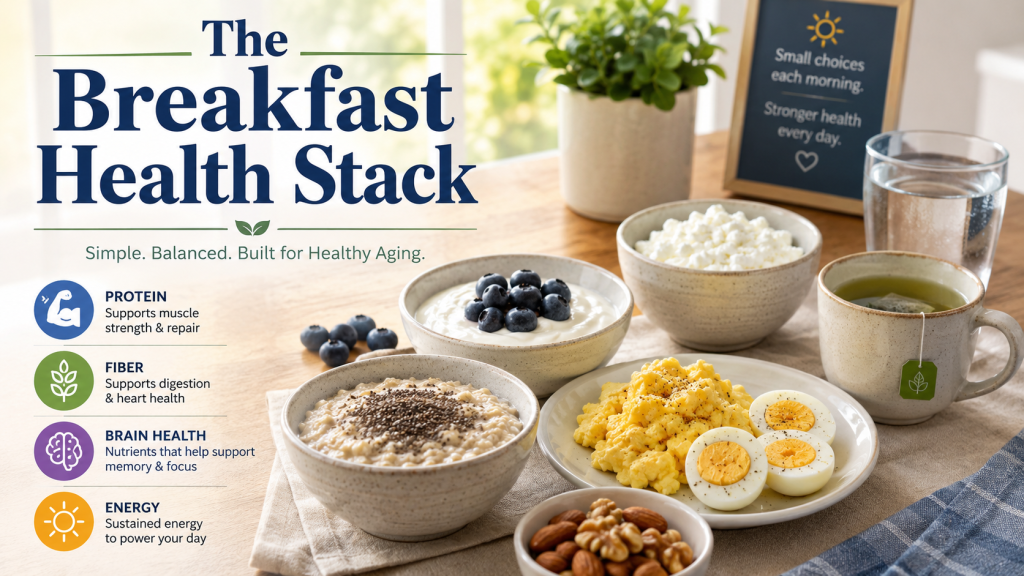
But as we get older, breakfast becomes more important than just “something to eat before lunch.” It becomes a chance to start the day with protein for muscle, fiber for digestion, healthy carbohydrates for energy, and nutrients that support the brain, bones, heart, and blood sugar.
That is what I call The Breakfast Health Stack.
Not a diet. Not a cleanse. Not a miracle cure. Just a smarter way to build the first meal of the day.
And the good news is that this does not require expensive powders, exotic berries from a mountaintop, or a breakfast that takes 45 minutes to prepare. Most of this can come from ordinary foods: Greek yogurt, cottage cheese, eggs, oatmeal, blueberries, nuts, seeds, and maybe a cup of coffee or green tea.
Simple foods. Simple habits. Better aging.
What Is a Breakfast Health Stack?
A “stack” just means you are combining several small health-supporting choices into one meal.
Instead of asking, “What do I feel like eating?” you ask a better question:
“What does my older body need this morning?”
That is the difference.
At 25, you may have gotten away with coffee and a sweet roll. At 65, 75, or 85, your body has different priorities. Your muscles need protein. Your bones need nutrients. Your gut needs fiber. Your brain needs steady fuel. Your blood sugar needs less chaos.
You have to eat for the age you are, not the age you were.
The National Institute on Aging recommends that older adults choose nutrient-dense foods across food groups, including fruits, vegetables, grains, protein foods, and low-fat or fat-free dairy. Protein foods include eggs, seafood, beans, nuts, seeds, soy foods, poultry, and lean meats.
That is the foundation of the Breakfast Health Stack: take ordinary foods and make them work harder for you.
Why Breakfast Matters More After 60
As people age, one of the biggest dangers is not just gaining weight. It is losing muscle.
Muscle is not just for looking good in a bathing suit. Muscle helps you stand up from a chair, walk safely, carry groceries, climb stairs, maintain balance, and stay independent.
Harvard Health notes that protein is important for building and preserving muscle, but it works best when combined with strength training, especially for older adults dealing with age-related muscle loss.
That matters because many seniors eat too little protein early in the day. They may have toast, cereal, fruit, or coffee, then push most of their protein to dinner. That is not always the best strategy.
A better breakfast gives the body something useful to work with early.
Think of your body like a repair crew. If the workers show up in the morning and there are no materials, not much rebuilding gets done.
Protein is part of those materials.
The First Layer: Protein
The first layer of the Breakfast Health Stack is protein.
For seniors, protein is not optional decoration. It is part of healthy aging. It supports muscle repair, immune function, tissue maintenance, and fullness.
Good breakfast protein choices include:
Greek yogurt
Cottage cheese
Eggs
Low-fat cheese
Milk or fortified soy milk
Nut butter
Tofu
Beans
Sardines or salmon, if you enjoy savory breakfasts
Now, not everyone wants sardines at 8 o’clock in the morning. That is understandable. Some people need to work up to that emotionally.
But Greek yogurt, cottage cheese, and eggs are easy places to start.
Cottage cheese is especially interesting because it gives you a lot of protein for relatively few calories. Greek yogurt does the same, depending on the brand and whether it is plain or sweetened.
The key word is plain.
A container of plain Greek yogurt can be a health food. A container of dessert-style yogurt with candy, syrup, and added sugar is basically pudding with a gym membership.
Read the label.
For more on protecting strength while losing weight, you could naturally connect this article to an internal Elderhood article such as How to Avoid Muscle Loss During Weight Loss.
The Second Layer: Fiber
The second layer is fiber.
Fiber helps digestion, supports fullness, and can help with cholesterol and blood sugar management. The CDC notes that fiber can help protect heart health by reducing the absorption of some fat and cholesterol, and it also supports digestive health.
Breakfast is a perfect time to add fiber because many common breakfast foods already contain it.
Good options include:
Oatmeal
Blueberries
Raspberries
Chia seeds
Ground flaxseed
Whole grain toast
Beans
Apples
Nuts
Psyllium fiber, if recommended and tolerated
Oatmeal is one of the easiest. It is inexpensive, shelf-stable, and simple. Add Greek yogurt or cottage cheese on the side, and suddenly breakfast has both fiber and protein.
Blueberries are another excellent choice. They are easy to add to yogurt, oatmeal, or cottage cheese. Frozen blueberries are often cheaper than fresh, last longer, and do not punish you for forgetting them in the refrigerator.
That is important. Healthy food only helps if you actually eat it before it becomes a science experiment in the back of the fridge.
The Third Layer: Brain-Friendly Foods
The brain does not need hype. It needs steady support.
No breakfast can guarantee memory protection. Let’s not play that game. But a healthy eating pattern can support overall brain and heart health, and the brain and heart are not strangers. What helps blood vessels often helps the brain too.
A smart breakfast may include berries, nuts, eggs, yogurt, oats, olive oil, and green tea.
Eggs contain choline, a nutrient involved in brain and nervous system function. Berries contain plant compounds called polyphenols. Oats provide fiber. Yogurt and cottage cheese provide protein. Nuts and seeds provide healthy fats and minerals.
None of these are magic. That is the point.
They are ordinary foods that support the body in ordinary but meaningful ways.
For an internal link, this section could connect naturally to Your Future Brain Health Depends on What You Do Today.
The Fourth Layer: Blood Sugar Stability
Many seniors are watching blood sugar, prediabetes, diabetes, weight, or energy crashes.
A breakfast built mostly from refined carbohydrates can cause trouble. Sweet cereal, white toast, pastries, juice, and sweetened coffee may taste good, but they can leave some people hungry again quickly.
A better approach is to combine protein, fiber, and healthy fat.
For example:
Greek yogurt + blueberries + chia seeds
Cottage cheese + berries + walnuts
Eggs + whole grain toast + avocado
Oatmeal + Greek yogurt + ground flaxseed
Plain yogurt + oats + cinnamon + fruit
The goal is not to fear carbohydrates. The goal is to choose better carbohydrates and not eat them naked.
A bowl of plain oatmeal with protein on the side is different from a giant muffin and orange juice. Same breakfast category, completely different effect.
The USDA’s MyPlate guidance emphasizes choosing a variety of nutritious foods, including fruits, vegetables, grains, protein foods, and dairy or fortified alternatives.
That is the simple idea: balance the plate instead of letting sugar drive the bus.
The Fifth Layer: Hydration
Many older adults start the day slightly dehydrated. After sleeping all night, the body needs fluid.
That does not mean you need to chug a gallon of water and spend the morning looking for bathrooms like you are on a treasure hunt.
But a glass of water in the morning is a simple habit. Coffee can be part of the routine too, but water should not be forgotten.
Green tea can also be a nice addition. It is inexpensive, shelf-stable, and easy to keep in the house. Unsweetened green tea gives you a warm drink without loading the morning with sugar.
For an Elderhood-style internal link, this could connect to The Simple Healthy Aging Plan.
The Sixth Layer: After-Breakfast Movement
The Breakfast Health Stack is not only what goes into your mouth. It is also what you do after you eat.
A short walk after breakfast can help the body use glucose more efficiently. It does not have to be dramatic. You do not need a tracksuit, a whistle, and a clipboard.
Just move.
Walk around the house. Do a few wall push-ups. Try gentle heel raises while holding the counter. March in place. Take a slow walk outside if the weather is safe.
Even a few minutes can help build the habit.
The point is not to “burn off breakfast.” That is old thinking.
The point is to tell your muscles, “Wake up. We have work to do.”
A Simple Breakfast Health Stack Formula
Here is the easiest formula:
Protein + fiber + fruit + healthy fat + water + movement
That is it.
You do not need to count every crumb. You do not need to make breakfast complicated.
Try one of these:
Plain Greek yogurt, blueberries, chia seeds, and walnuts
Cottage cheese, berries, cinnamon, and a few almonds
Two eggs, whole grain toast, and fruit
Oatmeal with ground flaxseed, Greek yogurt, and blueberries
Plain yogurt with oats, berries, and peanut butter
Egg and vegetable scramble with a side of fruit
The best breakfast is the one you will actually eat.
A perfect breakfast that sits untouched in the refrigerator does nothing for you. A simple breakfast repeated most mornings can change your routine.
Watch the Sugar Traps
Breakfast has become a sugar festival in disguise.
Many foods marketed as “healthy” are loaded with added sugar. Flavored yogurts, granola, breakfast bars, cereals, bottled smoothies, coffee drinks, and instant oatmeal packets can all be sugar traps.
That does not mean you can never enjoy them. It means you should know what you are eating.
Read the label. Look for added sugar. Compare protein. Compare fiber. Ask yourself whether the food is helping you or just wearing a healthy costume.
Some granola has more sugar than dessert. Some coffee drinks are milkshakes with better public relations.
This is where seniors have to be skeptical shoppers.
Consumers vote with their shopping cart.
Affordable Breakfast Matters
Healthy aging should not be only for people with fancy kitchens and expensive grocery bills.
The Breakfast Health Stack can be affordable.
Oats are inexpensive. Eggs are useful. Cottage cheese can be a strong protein buy. Greek yogurt often comes in larger tubs. Frozen blueberries can be cheaper than fresh. Ground flaxseed lasts a while. Peanut butter is affordable. Beans are one of the best bargains in the store.
You do not need a $12 smoothie from a boutique café.
You need a breakfast that gives your body useful building blocks.
That is the real victory.
Start Small
Do not try to change everything in one morning.
That is how people quit.
Start with one upgrade.
Add protein to breakfast.
Add blueberries to yogurt.
Switch from sweetened yogurt to plain.
Add chia or ground flaxseed.
Drink water before coffee.
Take a five-minute walk after eating.
One small improvement repeated every day becomes a lifestyle.
That is how healthy aging works. Not with drama. With repetition.
Final Takeaway
The Breakfast Health Stack is not a miracle. It is better than a miracle because it is real.
It is a simple way to give your older body what it needs: protein for muscle, fiber for digestion, fruit for nutrients, healthy fats for satisfaction, fluid for hydration, and movement to help your body use the meal.
You do not have to be wealthy to be healthy in old age.
You do not have to eat perfectly.
You just have to start eating for the age you are, not the age you were.
Breakfast is not just the first meal of the day.
It is your first chance to invest in your future.