
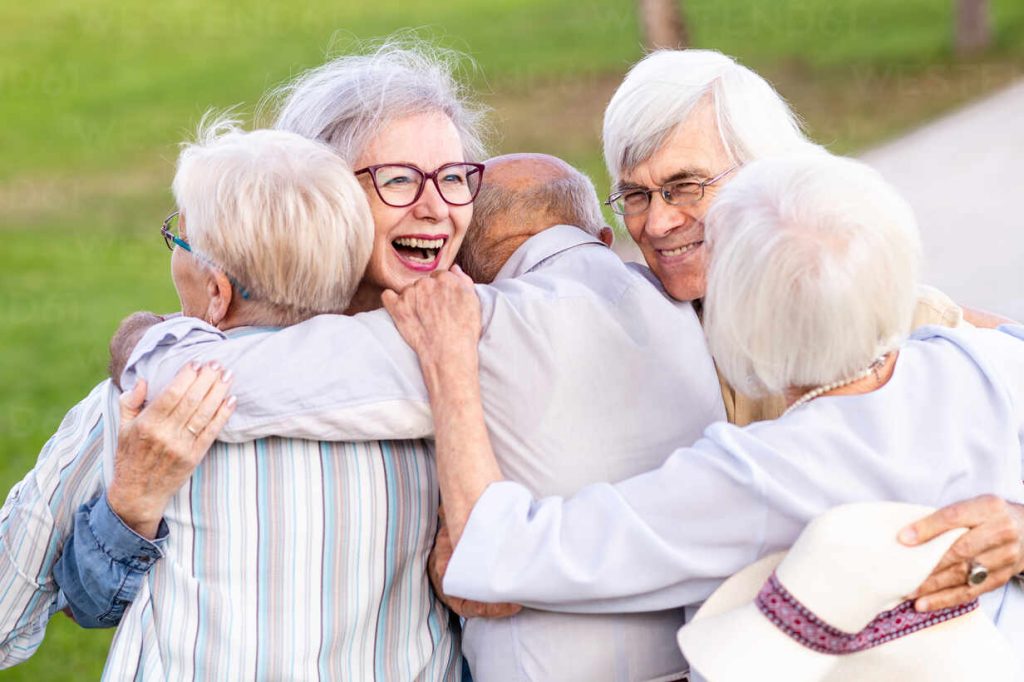
We Were Never Taught What Comes After Adulthood
Most of us were raised with a simple life map.
Go to school.
Build a career.
Raise a family.
Retire.
And then… nothing.
No training.
No language.
No guidance for what comes next.
So when people reach their late 60s, 70s, and beyond, they’re quietly pushed into a category called “old age,” as if life has suddenly narrowed instead of changed.
That’s a mistake.
Elderhood is not decline.
It’s a new stage of life.
And like every stage before it, it requires new skills, new thinking, and new habits.
Elderhood Begins When the Noise Fades
Here’s something rarely said out loud.
When you’re younger, life distracts you.
Jobs, deadlines, kids, bills, schedules.
As you age, that noise fades.
What’s left?
Your thoughts.
Your memories.
Your sense of meaning.
Your health.
This is where Elderhood begins.
Not when you “get old,” but when you finally have the space to look at life honestly — without the distractions that once kept you busy.
Why Many Seniors Feel Lost (Even When Life Is “Fine”)
Many people enter later life thinking:
“I should be happy. I did everything right.”
And yet they feel:
- Unmotivated
- Uncertain
- Less engaged
- Quietly anxious about health and relevance
This isn’t weakness.
It’s lack of preparation.
We prepare people for childhood.
We prepare them for careers.
We even prepare them for retirement finances.
But almost no one prepares them for Elderhood — the mental, emotional, and physical transition into this final, powerful chapter.
Elderhood Is About Direction, Not Age
Elderhood is not about how many candles are on your cake.
It’s about:
- How you relate to your body
- How you manage your thoughts
- How you find meaning without external validation
- How you stay engaged with life instead of shrinking from it
Some people enter Elderhood at 60.
Some at 75.
Some never do.
Age doesn’t define Elderhood.
Awareness does.
Health and Lifespan Are No Longer Fixed
For most of human history, lifespan felt like fate.
That’s no longer true.
New research continues to show that:
- Movement
- Sleep
- Nutrition
- Stress management
- Emotional regulation
Directly influence not just how long we live — but how well we live.
Your health is no longer separate from your lifespan.
They are one and the same.
And that puts responsibility — and power — back where it belongs: with you.
Elderhood Requires New Skills
You don’t use the same tools at every stage of life.
Elderhood asks for different skills:
- Emotional intelligence instead of endurance
- Reflection instead of accumulation
- Intentional habits instead of autopilot
- Contribution instead of competition
This is not about going backward.
It’s about growing differently.
Why Elderhood Matters Now More Than Ever
We are the first generation in history to:
- Live this long
- Have access to this level of medical knowledge
- Have the freedom to redefine later life
But without a framework, that freedom becomes confusion.
Elderhood.info exists to provide that framework — not with hype, but with grounded thinking, science, and lived experience.
📝 A Gentle Reflection: Where Are You in Elderhood?
This is not a test.
Nothing is recorded.
Just answer honestly.
- When I think about this stage of my life, I feel:
- Curious and open
- Uncertain but interested
- Disconnected or drifting
- My daily habits support:
- My energy and clarity
- Some aspects of my health
- Very little structure
- I feel I still have:
- Purpose and direction
- Questions about what’s next
- A sense of waiting
- When I think about aging, I mostly think about:
- Possibility
- Caution
- Loss
How to read this:
There are no right answers.
Wherever you are — that’s your starting point.
Elderhood is not about fixing yourself.
It’s about understanding where you are and choosing how you move forward.
❓ Frequently Asked Questions About Elderhood
What exactly is Elderhood?
Elderhood is a modern framework for the later stage of life — focused on awareness, health, meaning, and engagement rather than decline or withdrawal.
Is Elderhood the same as retirement?
No. Retirement is a financial status.
Elderhood is a life stage that involves mental, emotional, and physical adaptation.
When does Elderhood begin?
There is no set age. Elderhood begins when you recognize that life has shifted and you choose to engage with that shift intentionally.
Is Elderhood about living longer?
It’s about living better — with clarity, dignity, and purpose — for as long as life lasts.
Can Elderhood help with loneliness and anxiety?
Yes. Elderhood emphasizes connection, emotional intelligence, and meaning — key factors in reducing isolation and anxiety in later life.
Is Elderhood only for seniors?
Primarily, yes — but the mindset benefits anyone preparing for the second half of life.
What will I find on Elderhood.info?
You’ll find articles, reflections, and tools designed to help you:
- Think clearly
- Stay engaged
- Adapt wisely
- Live this stage of life fully
Final Thought
Elderhood is not something to fear or ignore.
It’s something to step into — deliberately, thoughtfully, and on your own terms.
You are not done.
You are not fading.
You are entering a new stage of life.
And this time, you don’t have to walk it without a map.