
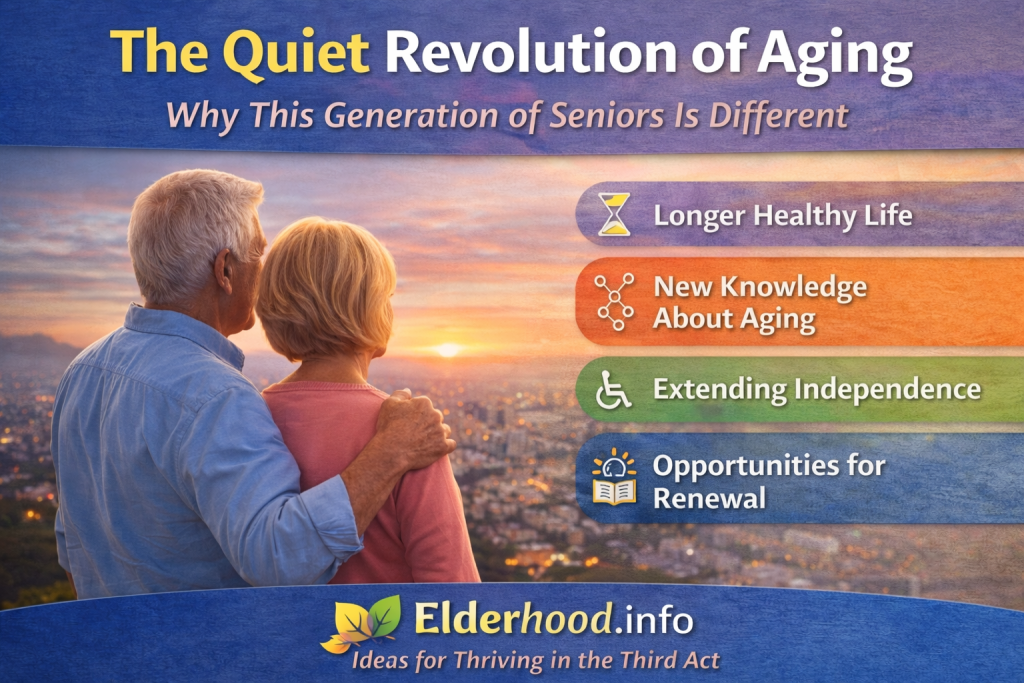
For most of human history, aging followed a predictable path.
You worked.
You slowed down.
You retired.
And gradually, the world moved on without you.
That model is disappearing.
Something very different is happening in the modern world, and many people do not yet realize it.
A quiet revolution is taking place in aging.
And the generation now entering their seventies and eighties is at the center of it.
We Are Living Longer — But That’s Not the Real Story
Yes, life expectancy has increased.
But the real transformation is not simply longer life.
It is longer healthy life.
Modern research on nutrition, exercise, sleep, and chronic disease prevention has dramatically changed what aging can look like.
Many people today remain physically active, mentally engaged, and socially connected decades longer than previous generations.
The idea that aging automatically means decline is beginning to break down.
Knowledge About Aging Has Exploded
Another major difference is knowledge.
In previous generations, people had very little understanding of how the body ages.
Today we hear new vocabulary that did not exist in everyday conversation decades ago:
• Sarcopenia
• Autophagy
• Neuroplasticity
• Longevity science
These words may sound technical, but the message behind them is simple.
Scientists are learning how the body repairs itself, protects itself, and maintains function over time.
That knowledge is slowly reshaping how people think about aging.
Technology Is Extending Independence
Technology is also changing the experience of aging.
Remote work allows older adults to remain economically active longer.
Artificial intelligence tools help people manage information and stay connected.
Medical technology continues to improve treatments for conditions that once limited life expectancy.
Even emerging technologies like autonomous vehicles may someday allow seniors to maintain independence far longer than previous generations.
For the first time in history, aging and independence may grow together instead of apart.
The Cultural Story of Aging Is Changing
Perhaps the most important shift is cultural.
For decades society treated aging as a period of withdrawal.
But many people entering Elderhood today see something else.
They see a stage of life with:
• Time for reflection
• Freedom from earlier pressures
• Opportunities for contribution
• A deeper appreciation for life itself
Rather than decline, Elderhood can become a stage of renewal and perspective.
The Beginning of a Generational Renaissance
When historians look back on this period, they may see something remarkable.
A generation that experienced enormous technological change, social transformation, and scientific discovery is now entering its later years.
This generation went from black-and-white television to artificial intelligence in a single lifetime.
That kind of experience creates perspective.
And perspective is one of the great gifts of age.
The result may be something we have rarely seen before.
A Generational Renaissance — a period when older adults contribute wisdom, stability, and experience to a rapidly changing world.
The Real Meaning of Elderhood
Elderhood is not simply about surviving longer.
It is about understanding life more deeply.
It is about recognizing that time is limited, which makes every moment more valuable.
And it is about sharing the lessons learned along the way.
For those who reach it with curiosity and engagement, Elderhood can become one of the most meaningful chapters of life.