
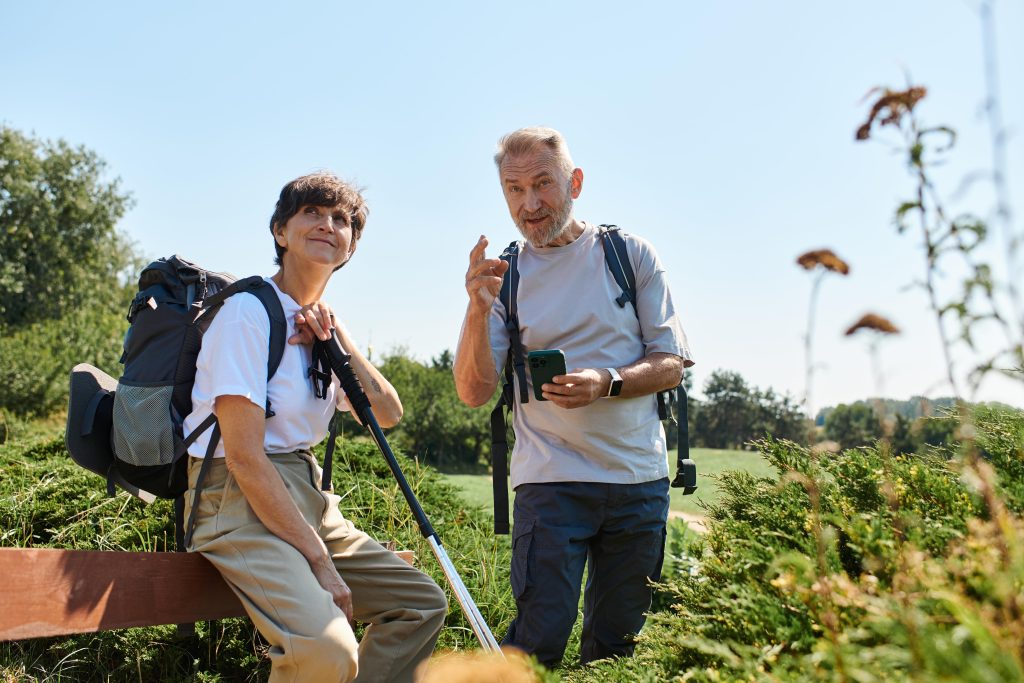
For most of human history, reaching old age was rare.
Life was hard. Medicine was limited. Knowledge about health was almost nonexistent.
A person who lived into their seventies or eighties was considered unusual.
Today something remarkable has happened.
Millions of people are reaching what we now call Elderhood — and they are arriving with more knowledge, more tools, and more opportunities than any generation before them.
It is one of the quiet revolutions of our time.
We Grew Up in One World — and Arrived in Another
Think about the lifetime most of today’s seniors have experienced.
Many of us were born into a world with:
• black-and-white television
• rotary telephones
• paper maps
• manual typewriters
• limited medical knowledge
Fast forward to today.
We now live in a world with:
• artificial intelligence
• self-driving vehicles
• video calls across the globe
• medical imaging that can see inside the body in minutes
• research uncovering how aging actually works
No generation has ever witnessed such dramatic change within a single lifetime.
Modern Science Is Changing What We Know About Aging
For decades people assumed aging meant unavoidable decline.
But modern research is telling a different story.
Scientists now understand many biological processes that influence aging and health.
Terms like autophagy, neuroplasticity, and sarcopenia may sound technical, but the meaning behind them is encouraging.
They reveal that the body has powerful systems designed to repair, adapt, and maintain itself.
For example:
Autophagy is the body’s cellular cleaning process that removes damaged components from cells.
Neuroplasticity shows that the brain continues to adapt and form new connections throughout life.
Strength training research confirms that muscle can improve at almost any age.
The vocabulary may be new, but the message is hopeful.
The human body is far more resilient than we once believed.
Technology Is Extending Independence
Another quiet revolution is happening in technology.
Devices that once seemed futuristic are quickly becoming part of everyday life.
Artificial intelligence is helping doctors detect disease earlier.
Wearable devices monitor heart rhythm and physical activity.
Self-driving technology promises a future where seniors who can no longer drive may still maintain independence.
For millions of people, these developments may extend the number of healthy, independent years they enjoy.
The Real Advantage of Age
While science and technology are powerful, the greatest advantage of Elderhood may be something much simpler.
Perspective.
After decades of living, people in Elderhood often understand things that younger generations are still discovering.
They have experienced:
• success and failure
• loss and recovery
• joy and disappointment
• ambition and reflection
Those experiences create a deeper understanding of life.
In many ways, Elderhood is not the end of the journey.
It is the stage where life finally begins to make sense.
A New Stage of Life
The word “retirement” once suggested stepping away from life.
But many people today are redefining what this stage means.
Elderhood is increasingly becoming a time for:
• learning new ideas
• sharing wisdom
• exploring interests
• contributing to communities
• enjoying relationships and experiences
The goal is not simply to live longer.
It is to live better.
Final Thought
History may look back at this generation and recognize something extraordinary.
We are the first generation to reach Elderhood with:
modern medicine
modern technology
and growing knowledge about how to maintain health as we age.
In other words, we are not simply living longer.
We are learning how to live well longer.
And that may be one of the most important discoveries of our time.