
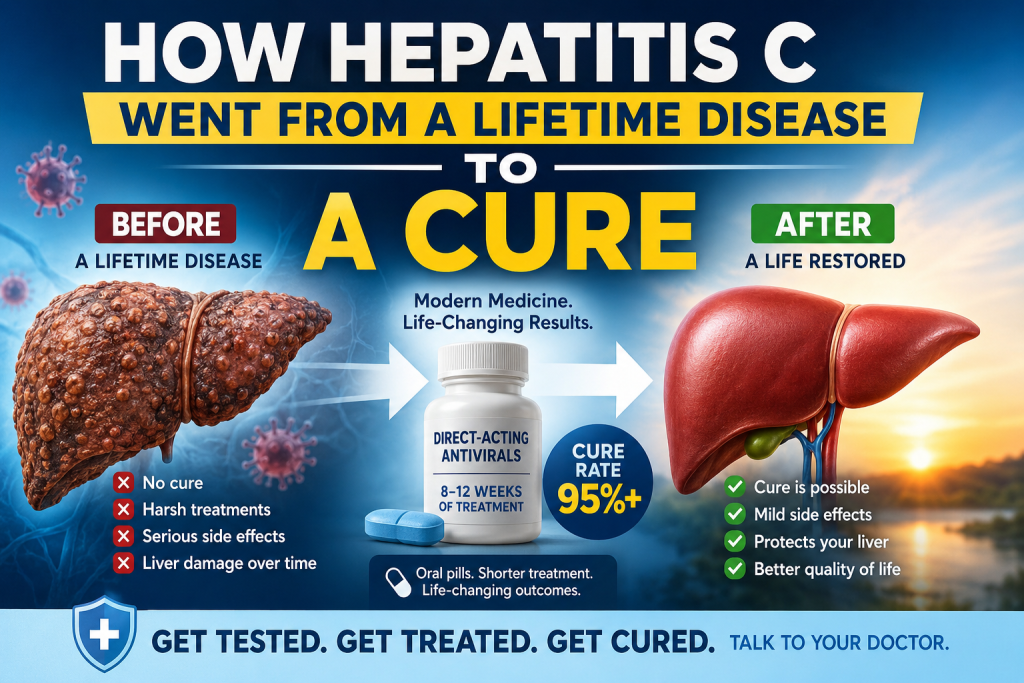
There was a time when a hepatitis C diagnosis could feel like a lifetime sentence.
The infection might remain inside a person’s body for decades, slowly damaging the liver while producing few—or no—noticeable symptoms. Treatment was lengthy, side effects could be severe, and success was far from guaranteed.
Then medicine accomplished something extraordinary.
Scientists did not merely develop a treatment that helped control hepatitis C. They developed medicines that can actually cure it.
Today, more than 95 percent of people treated with modern direct-acting antiviral medicines can be cured, usually after taking oral medication for only eight to twelve weeks.
This is one of the greatest medical success stories of modern times. It is also a powerful example of the Elderhood principle that we should remain healthy enough to benefit from tomorrow’s discoveries.
As we discussed in Don’t Wait for Tomorrow: Use Today’s Science Today, healthy aging is built through ordinary decisions made today—not promises to begin someday.
In the case of hepatitis C, the future did not merely arrive.
It brought a cure with it.
What Is Hepatitis C?
Hepatitis C is a liver infection caused by the hepatitis C virus, commonly called HCV.
The liver is one of the body’s hardest-working organs. It processes nutrients, filters the blood, helps regulate blood sugar, produces proteins, stores energy and breaks down medications and harmful substances.
You could call it the body’s chemical-processing plant—except it does not get weekends off.
Hepatitis C spreads primarily through exposure to infected blood. Possible routes include sharing needles or injection equipment, exposure to inadequately sterilised medical or tattooing equipment, and blood transfusions performed before modern blood-screening protections were established.
The World Health Organization estimates that approximately 47 million people worldwide are living with chronic hepatitis C infection. In 2024, hepatitis C contributed to an estimated 239,000 deaths, mainly from cirrhosis and liver cancer.
Some people naturally clear the virus shortly after infection. For many others, however, hepatitis C becomes chronic and remains in the body.
Without treatment, chronic infection can lead to:
- Progressive liver scarring
- Cirrhosis
- Liver failure
- Liver cancer
- The need for a liver transplant
- Premature death
The frightening part is that this damage may be occurring while the person feels perfectly healthy.
The Disease That Could Hide for Decades
Hepatitis C is sometimes called a silent infection because many people experience no obvious symptoms.
A person can carry the virus for years without realising it. There may be no severe pain, dramatic illness or flashing warning sign.
Unfortunately, the liver is not known for sending polite reminder notices.
When symptoms do occur, they may include fatigue, nausea, loss of appetite, abdominal discomfort, dark urine, pale stools, joint pain or yellowing of the skin and eyes, known as jaundice.
However, waiting for symptoms is not a reliable strategy. Significant liver damage can occur before a person begins feeling ill.
According to the CDC, most people with hepatitis C do not initially have symptoms. Testing and early treatment can prevent severe liver complications and may also help reduce transmission.
That is why a simple blood test can be so important.
Why Older Adults Should Pay Attention
Hepatitis C is especially relevant to older adults because some may have been exposed many years ago.
Before widespread blood-supply screening was introduced, hepatitis C could be transmitted through blood transfusions and certain medical procedures. Others may have been exposed through injection drug use—even briefly—or through unsterilised equipment.
People sometimes believe that something they did 30, 40 or 50 years ago no longer matters.
Viruses are not sentimental about the calendar.
A person may have been infected decades ago and still carry the virus today.
The CDC recommends that all adults be screened for hepatitis C at least once, with additional testing for people who have ongoing risks or possible exposure. A doctor can determine whether repeat testing is appropriate based on medical and personal history.
Testing does not mean someone has done anything wrong. It simply means they are using modern medicine to obtain information that was not available to previous generations.
That is a central theme throughout The Future Is Arriving series: new testing and treatment options are changing what it means to grow older.
How Hepatitis C Testing Works
Hepatitis C testing often involves two steps.
The antibody test
The first blood test looks for antibodies to the hepatitis C virus.
Antibodies are created by the immune system after exposure. A positive antibody result means that the person has encountered the virus at some point.
It does not necessarily mean the virus is still present.
Some people naturally clear the infection, while others may have already completed successful treatment. Once antibodies develop, they can remain detectable even after the active infection has disappeared.
The HCV RNA test
A second blood test looks for the genetic material of the virus itself.
This test determines whether hepatitis C is currently active in the bloodstream.
Here is an easy way to remember the difference:
The antibody test asks, “Have you ever met this virus?”
The RNA test asks, “Is the virus still living here?”
A person with detectable HCV RNA should be connected with a healthcare professional who can evaluate liver health and recommend appropriate treatment. Current expert guidance supports linking everyone with active infection to knowledgeable medical care.
The Old Treatment Was Difficult
For many years, hepatitis C treatment relied heavily on interferon, often combined with another drug called ribavirin.
Interferon was usually given by injection, and treatment could continue for many months.
The side effects could include:
- Flu-like symptoms
- Severe fatigue
- Depression and mood changes
- Anaemia
- Difficulty concentrating
- Sleep problems
- Loss of appetite
- Skin reactions
Even after enduring months of treatment, not every patient was cured.
It was rather like running a marathon through a swamp and being told that the finish line might—or might not—exist.
Some patients were unable to tolerate the treatment. Others were not considered suitable candidates because of their age, health or liver condition.
Doctors knew the world needed a better answer.
The Direct-Acting Antiviral Revolution
The great breakthrough came with medicines known as direct-acting antivirals, or DAAs.
These drugs were designed to target specific stages of the hepatitis C virus’s life cycle. Instead of broadly stimulating the immune system, they interfere directly with the virus’s ability to reproduce.
Think of the virus as an intruder trying to manufacture thousands of copies of itself.
The new medicines do not merely chase the intruder around the house.
They shut down the copying machine.
The first interferon-free treatment options were approved in late 2013 and early 2014. This marked a major turning point: a serious chronic viral infection could now be cured in nearly all treated patients after a relatively short course of therapy.
Modern direct-acting antiviral treatment is usually:
- Taken by mouth
- Completed in eight to twelve weeks for many patients
- Far easier to tolerate than older treatments
- Effective across multiple hepatitis C genotypes
- Successful in more than 95 percent of treated cases
The CDC no longer recommends interferon and ribavirin as the standard approach because direct-acting antivirals are more effective, better tolerated and require a shorter treatment period.
That is not a minor improvement.
It is a medical revolution.
What Does “Cured” Mean?
Doctors determine whether hepatitis C has been cured by performing another viral blood test after treatment.
When the virus remains undetectable at least 12 weeks after treatment has ended, the patient has achieved what doctors call a sustained virologic response, or SVR.
For practical medical purposes, SVR means the infection has been cured.
The virus is no longer continuing its attack on the liver. The patient is no longer living with active chronic hepatitis C.
However, a cure does not create lifelong immunity.
A person can become infected again after a new exposure because there is currently no effective vaccine against hepatitis C.
People who have been cured should still avoid sharing needles, razors, toothbrushes or other items that could contain blood. Tattoo, piercing and acupuncture equipment should always be properly sterilised.
Does the Liver Recover After Treatment?
Curing hepatitis C stops the virus from continuing to damage the liver.
For many patients, liver inflammation decreases and liver function may improve. Some liver scarring may also improve gradually after the infection is eliminated.
But a cure cannot always erase damage that has already occurred.
A person with advanced fibrosis or cirrhosis may still face an increased risk of liver cancer and other complications. Those patients may need regular liver imaging, blood tests and long-term medical follow-up even after the virus has been cured.
This is why early detection matters.
Curing the infection and reversing every consequence of the infection are not necessarily the same thing.
People diagnosed before severe scarring develops have a better opportunity to protect their long-term liver health.
Treatment Must Be Individualised
Modern hepatitis C therapy may sound simple—and for many people it is—but it still requires medical supervision.
Before choosing a treatment, a healthcare professional may evaluate:
- Whether the infection is currently active
- The degree of liver scarring
- Whether cirrhosis is present
- Previous hepatitis C treatment
- Kidney function
- Hepatitis B and HIV status
- Current prescription medications
- Over-the-counter medicines and supplements
- Possible drug interactions
Certain direct-acting antivirals may not be appropriate for patients with advanced liver impairment. The FDA has warned that some hepatitis C medicines have caused rare but serious liver injury when used in patients for whom those drugs were not indicated.
That is why patients should not purchase hepatitis C medicines from questionable online sellers or change treatment without consulting their medical team.
Your doctor and pharmacist need a complete list of everything you take—including vitamins, herbal products and the supplement your neighbour claims was personally discovered by monks living on a mountain.
The Remaining Challenge: Finding and Treating Everyone
The scientific problem of curing hepatitis C has largely been solved.
The public-health problem has not.
Millions of people still do not know they have the infection. Others have been diagnosed but have not started treatment.
WHO reported that, by the end of 2024, only about 36 percent of people estimated to have been infected during the previous decade knew their diagnosis. Many diagnosed patients still had not received direct-acting antiviral treatment.
Access can be affected by:
- The cost of treatment
- Insurance restrictions
- Limited access to specialists
- Lack of testing
- Fear or stigma
- Complicated healthcare systems
- Patients not knowing that hepatitis C is now curable
The first direct-acting antiviral treatments were extremely expensive. Prices and access have improved as more medications, negotiated arrangements and generic versions have entered the market, although costs still vary by country, insurer and individual circumstances.
Patients experiencing coverage problems should ask about insurance appeals, manufacturer assistance programmes, community health centres, state hepatitis programmes and nonprofit patient-support organisations.
The first denial is not always the final answer.
Our article on how yesterday’s expensive medicines become today’s affordable treatments explores how competition, generics and biosimilars can eventually expand access to medical breakthroughs.
The Bigger Lesson for Healthy Aging
The hepatitis C story demonstrates why older adults should not assume that yesterday’s medical reality is still today’s reality.
Diseases once considered lifelong are becoming curable.
Cancers once treated with a one-size-fits-all approach are increasingly being targeted according to their genetic characteristics.
Medicines that once required hospital visits may now be taken at home.
Treatments that were once unaffordable may eventually become accessible through competition and generic alternatives.
This is why Elderhood encourages readers to remain informed, ask questions and continue adapting.
A diagnosis received 20 years ago may have new treatment options today. Advice given ten years ago may need to be reconsidered. A condition someone was told to “live with” may now be treatable—or even curable.
Medical progress does not help us when we do not know it has happened.
Five Things to Remember
First, hepatitis C can remain hidden for decades without causing noticeable symptoms.
Second, testing usually begins with an antibody test and is confirmed with an RNA test that looks for active virus.
Third, direct-acting antiviral pills cure more than 95 percent of treated patients, often in eight to twelve weeks.
Fourth, being cured does not make someone immune. Reinfection is possible, and there is currently no hepatitis C vaccine.
Fifth, people with cirrhosis or advanced liver damage may still need long-term monitoring after treatment.
The Future Has Already Arrived
Hepatitis C went from being a frightening, potentially lifelong infection to becoming one of the most curable chronic viral diseases in medicine.
Months of injections and punishing side effects were replaced by a short course of pills.
Uncertain results were replaced by cure rates above 95 percent.
A disease that could quietly destroy the liver over decades can now be detected, treated and eliminated.
That is what real medical progress looks like.
Sometimes the future arrives through a giant machine, a robotic surgeon or an astonishing genetic discovery.
And sometimes it arrives in a small bottle of pills.
The lesson is simple:
Stay healthy until the future gets here.
In the case of hepatitis C, the future is no longer coming.
It has already arrived.
Visit Elderhood.info for more information about healthy aging, medical breakthroughs and practical ways to prepare for a longer, healthier future.
This article is provided for general educational purposes and is not personal medical advice. Anyone concerned about hepatitis C testing or treatment should speak with a qualified healthcare professional.