
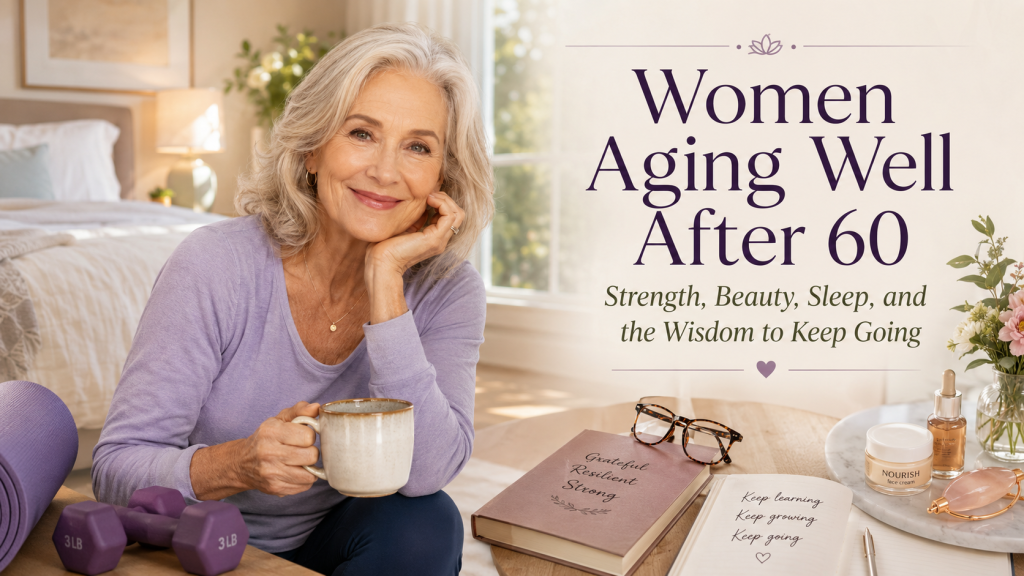
Aging well after 60 is not about trying to look 35 again. That ship sailed, and frankly, some of us are glad it did. Aging well is about staying strong, staying clear-minded, staying interested in life, and looking like you still care about the person staring back at you in the mirror.
For women, aging after 60 comes with its own story. The body changes. Hormones change. Sleep may change. Muscle, bone, skin, energy, balance, mood, and confidence may all ask for a little more attention than they did at 40.
But here is the good news: after 60, small daily choices can still make a powerful difference.
This is not about perfection. It is not about chasing every new wellness trend that comes along with a fancy bottle and a price tag that looks like a mortgage payment. It is about understanding what your body needs now and giving it a fighting chance.
That is what Elderhood is really about: not pretending aging does not happen, but learning how to age with strength, dignity, humor, and common sense.
Aging Well Is Not Vanity
Some women were taught that paying attention to appearance is vanity. That is nonsense.
Looking healthy is not vanity. Taking care of your skin, hair, posture, clothing, teeth, strength, and energy is not shallow. It is self-respect.
There is a big difference between trying to look young and trying to look alive.
After 60, appearance often reflects health habits. Hydration, sleep, movement, protein, sunlight, stress, social connection, and medical care all show up somewhere. They show up in the face, the posture, the walk, the voice, and the mood.
That does not mean every wrinkle is a failure. Wrinkles are not the enemy. Giving up is the enemy.
A woman aging well does not have to look young. She looks present. She looks engaged. She looks like she still belongs in her own life.
If you enjoy practical ideas about everyday healthy aging, you may also like this Elderhood article: Healthy Aging Starts With the Small Choices You Make Every Day.
Muscle Is Not Just for Men
For years, women were often told to “tone up,” while men were told to build strength. That did women no favors.
After 60, muscle becomes one of the most important health assets a woman has. Muscle helps with balance, walking, climbing stairs, getting out of a chair, carrying groceries, protecting joints, managing blood sugar, and staying independent.
This does not mean you need to become a bodybuilder. Nobody is asking you to oil up and pose under stage lights. But your muscles need a reason to stay.
The Centers for Disease Control and Prevention recommends that older adults aim for regular aerobic activity and muscle-strengthening activity at least two days a week. That can include resistance bands, light dumbbells, machines, wall push-ups, chair squats, or bodyweight exercises. The official CDC guidance on activity for older adults is here: CDC Physical Activity Guidelines for Older Adults.
The key is consistency.
A woman who starts with five minutes of strength work is still ahead of the woman waiting for the perfect program. Wall push-ups count. Heel raises count. Light weights count. Getting up and down from a chair counts.
Your body is listening. Give it a message: “We are still using this equipment.”
Bone Health Deserves Attention
Women after 60 need to take bone health seriously.
After menopause, lower estrogen levels can contribute to bone loss. Osteoporosis can make bones weaker and increase the risk of fractures. The scary part is that bone loss often has no obvious symptoms until a fracture happens. That is a lousy way to find out there was a problem.
The National Institute on Aging explains that osteoporosis weakens bones and makes them more likely to break. Women, especially after menopause, are at higher risk. You can read more from the National Institute on Aging here: Osteoporosis and Aging.
This is why women should talk with their doctors about bone density testing, calcium, vitamin D, strength training, balance exercises, and fall prevention.
A broken hip or wrist is not just “one of those things.” It can change a person’s independence. Protecting your bones is protecting your future freedom.
Protein Matters More Than Many Women Think
Many women were raised in diet culture. Eat less. Skip meals. Avoid fat. Count calories. Be smaller.
After 60, the goal should not simply be “eat less.” The goal should be nourish better.
Protein becomes especially important because aging bodies tend to lose muscle more easily. If a woman is also losing weight, especially with newer weight-loss medications, protein becomes even more important.
Protein helps maintain muscle, supports healing, helps with fullness, and gives the body building material. Good options may include eggs, Greek yogurt, cottage cheese, fish, chicken, beans, lentils, tofu, and other protein-rich foods.
This does not mean every woman needs to eat like a football player in training camp. But it does mean that tea and toast is not a long-term nutrition plan.
For a related Elderhood discussion, read: How to Avoid Muscle Loss During Weight Loss.
The larger point is simple: do not just feed your appetite. Feed your body.
Sleep Is Not Wasted Time
Many women spend decades taking care of everyone else. Children, spouses, parents, jobs, homes, appointments, meals, holidays, emergencies — the list never ends.
Then after 60, when the body asks for sleep, some women feel guilty resting.
That has to stop.
Sleep is not wasted time. Sleep is repair time. It is brain time. It is hormone time. It is immune system time. It is tomorrow’s energy being built tonight.
The National Institute on Aging includes sleep as one of the major pieces of healthy aging, along with staying active, eating well, managing stress, limiting alcohol, and staying socially connected. Their overview is useful here: What Do We Know About Healthy Aging?.
Poor sleep can affect mood, memory, appetite, blood pressure, balance, and energy. A woman who is not sleeping well should not just “tough it out.” She should ask why.
Could it be sleep apnea? Pain? Medication timing? Alcohol? Caffeine too late? Anxiety? Restless legs? Bathroom trips? An uncomfortable mattress? Too much screen time at night?
Sleep problems are not a character flaw. They are a signal.
Aging well means listening to signals before they become alarms.
Move After Meals
One of the simplest healthy aging habits is light movement after eating.
This does not mean running around the block after dinner like you are training for the Olympics. It can be a short walk, a few minutes of standing, gentle heel raises, light housework, or walking around the kitchen.
After meals, muscles can help absorb some of the glucose from the bloodstream. Movement tells the body, “Use this energy.” Sitting immediately after eating tells the body, “Store it and good luck.”
For many women after 60, this habit is practical because it does not require a gym, special clothes, or a grand announcement. You eat, then you move a little.
That is it.
As we often say at Elderhood, aging well is not one heroic decision. It is hundreds of small decisions repeated often enough that the body finally believes you.
Do Not Ignore the Brain
Women aging well after 60 also need to protect brain health.
That means physical activity, sleep, nutrition, learning, social connection, hearing, vision, and managing chronic conditions like high blood pressure, diabetes, and depression.
Brain health is not just crossword puzzles, although those are fine if you enjoy them. The brain needs blood flow, oxygen, stimulation, relationships, and purpose.
Read. Walk. Learn something new. Dance. Cook. Take a class. Call a friend. Volunteer. Listen to music. Practice balance. Try a new recipe. Learn technology slowly enough that it does not make you want to throw the phone into the nearest pond.
AARP’s Staying Sharp program describes several lifestyle pillars that support brain health, including eating well, sleeping, exercising, staying social, managing stress, and engaging the brain. You can read more here: AARP Brain Health Lifestyle Habits.
The brain likes novelty. It likes challenge. It likes connection.
A quiet life can be peaceful. But a disconnected life can become dangerous.
Social Connection Is Health Care Too
Loneliness is not just sadness. It can affect health.
After 60, women may face widowhood, divorce, retirement, caregiving exhaustion, friends moving away, or adult children living far from home. A woman can be surrounded by people and still feel alone.
Social connection is not a luxury. It is part of healthy aging.
That connection can come from family, friends, faith communities, classes, walking groups, book clubs, volunteering, part-time work, senior centers, or even regular phone calls.
The point is not to become the mayor of every room. The point is to stay connected enough that your life has rhythm, recognition, and meaning.
AARP has also written about the importance of social connection and longevity, including the value of volunteering and in-person learning. You can read more here: How Social Connections Help You Live Longer.
Aging well is much harder alone. Even strong women need people.
Preventive Care Still Matters
Some people act as if preventive care stops mattering after a certain age. That is foolish.
Blood pressure checks, cholesterol, diabetes screening, mammograms when appropriate, colon cancer screening when appropriate, bone density testing, eye exams, dental care, hearing checks, vaccinations, medication reviews, and fall-risk evaluations all still matter.
The goal is not to spend your life in waiting rooms. The goal is to catch problems early enough that they do not steal your independence.
Hearing is a perfect example. Untreated hearing loss can lead to isolation, frustration, and less participation in life. Vision problems can increase fall risk. Poor dental health can affect nutrition. Foot problems can reduce walking.
Everything connects.
After 60, health is no longer a collection of separate parts. It is a system.
Beauty After 60 Is Health in Motion
Beauty after 60 is not the same as beauty at 25. Thank goodness.
At 25, beauty may be mostly nature. After 60, beauty is often maintenance, wisdom, confidence, posture, kindness, grooming, movement, sleep, and attitude.
A woman who walks with strength, dresses with intention, smiles with warmth, and stays engaged in life has a kind of beauty that no jar can manufacture.
Yes, use the moisturizer. Get the haircut. Wear the earrings. Put on the lipstick if you like it. Wear clothes that fit the body you have now, not the body you had in 1987.
This is not vanity. This is participation.
You are still here. Dress like you believe it.
The Attitude That Helps
Aging well after 60 requires a change in attitude.
The question is not, “How do I stop aging?”
You cannot.
The better question is, “How do I age in a way that protects my independence, energy, dignity, and joy?”
That is a question worth asking every day.
You do not need to overhaul your life by Monday morning. Start small.
Walk after meals.
Add protein to breakfast.
Do wall push-ups.
Go to bed at a regular time.
Call a friend.
Schedule the bone density test.
Drink water.
Learn something.
Put on shoes that support your balance.
Stop pretending exhaustion is a badge of honor.
Aging well is not about becoming someone else. It is about becoming a better caretaker of the person you already are.
Final Thought
Women aging well after 60 are not lucky by accident. They are adapting.
They are learning what their body needs now. They are paying attention to muscle, bones, sleep, food, movement, brain health, connection, and confidence.
They are not trying to turn back the clock. They are trying to make the next chapter strong enough to enjoy.
That is the real goal.
Not younger.
Stronger.
Not perfect.
Present.
Not invisible.
Very much alive.